
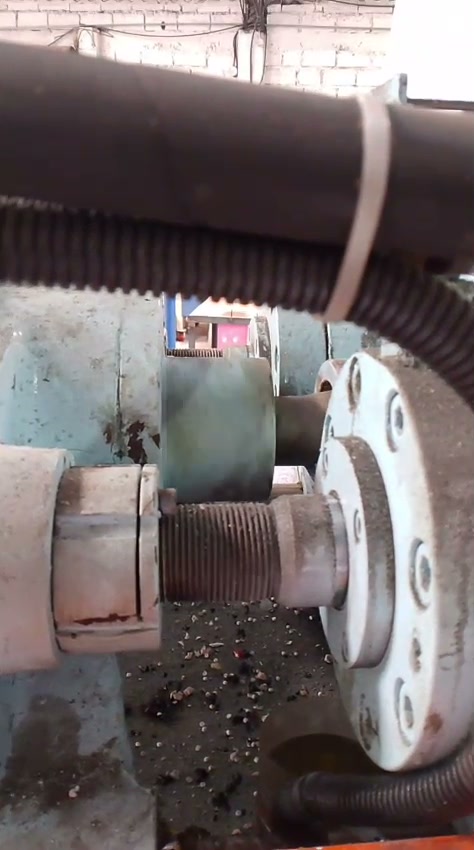
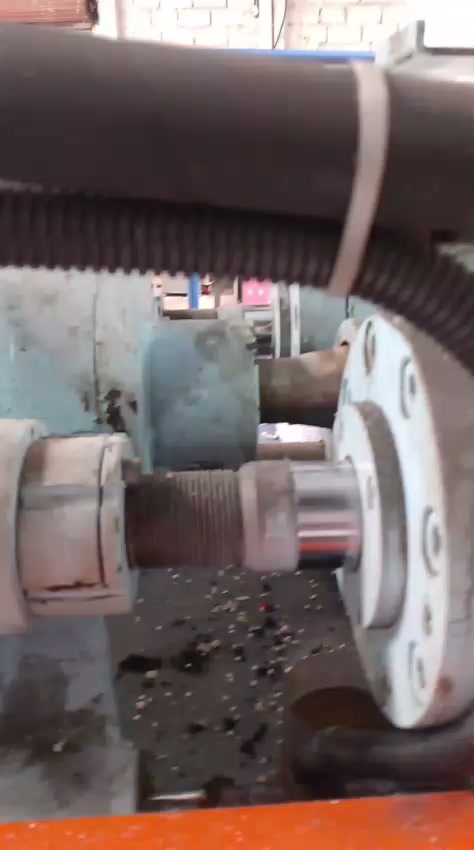
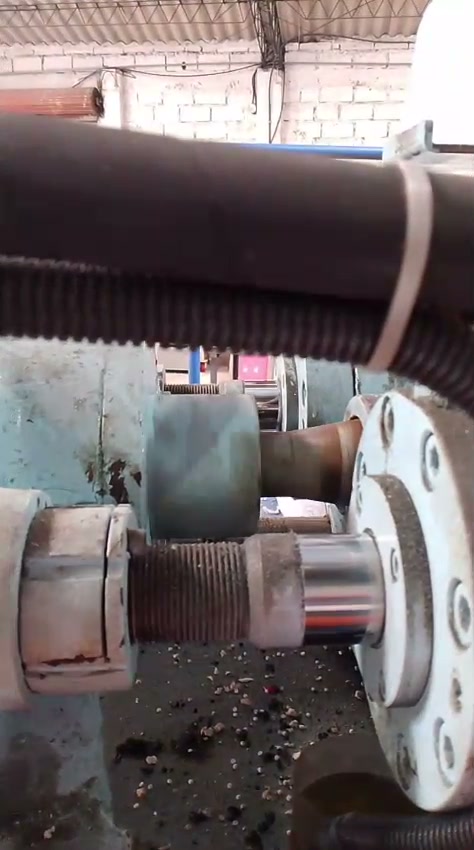
A customer in Ecuador, running one of our older sole injection machines with a standard induction motor (not servo), sent us a short video one morning. Every cold start, the motor made a deep, straining noise at the very end of the screw-retract / plasticising stroke — as if something inside was hitting a wall. After thirty or forty minutes of running, the noise disappeared. Once the machine was warm, it produced perfect PVC soles the rest of the day.
The customer's first instinct was the same as most operators': check the voltage (it was normal) and check the barrel temperature (also normal). He had tried nudging the barrel set-point up a few degrees — that helped, but he correctly stopped before the PVC started to burn.
We told him not to touch any hardware. This is a textbook cold-machine physics problem, not a defect, and the fix takes 20 minutes of operator routine — not a service call.
What the Noise Actually Is
On a standard-motor sole machine, the screw is driven by a hydraulic motor (powered by the main hydraulic pump). During the charging phase, the screw rotates and retreats while picking up new material from the hopper. Towards the end of that stroke, two forces peak at once:
- Backpressure — the resistance the receding screw feels from the molten plastic packed in front of it.
- Mechanical inertia — peak torque on the drive coupling, thrust bearing, and ball-spline guides.
When the machine is cold, the hydraulic system, the plastic, and the bearing grease are all working against you simultaneously. None of them are damaged. They are all just cold.
Four Cold-State Causes (and Which Ones Stack)
In our experience this symptom is almost never caused by a single faulty part. It's two or three normal-but-cold conditions stacking up — which is also why the noise quietly disappears after half an hour.
1 · Cold hydraulic oil — the most common driver
Hydraulic oil thickens at low temperatures. At the end of the charging stroke, the retreating screw demands maximum flow from the pump exactly when the oil is at its most viscous. Pushing thick oil through proportional valves and through a hydraulic motor produces a deep, humming, straining noise — sometimes mistaken for a failing pump.
Once the oil warms to 45–55 °C in normal operation, viscosity drops, flow eases, and the noise vanishes.
Two things to check first:
- Ambient temperature. If the factory is cold in the morning (Ecuador's Andean factories run cold; so do many in Turkey, the Balkans, parts of Argentina), the symptom will be worse.
- Oil grade. Confirm the machine is filled with the right viscosity for the climate — typically ISO VG 46 for moderate climates, VG 32 in colder ones. We have seen factories that received a machine pre-filled with VG 68 and then moved it into a cool morning environment — same hardware, completely different cold-start behaviour.
2 · Barrel "looks warm" but isn't fully heat-soaked
Heater controllers measure the outer wall of the barrel. The wall can reach the set-point well before the heat has penetrated to the core of the screw and to the plastic packed deep in the flights.
At the end of the charging stroke, the screw is pulling against a large mass of barely-softened material that hasn't soaked through yet. That semi-rigid plug is what your drive motor is fighting.
This is why turning the heater up "fixed it" — but the fix is wrong. A higher set-point reduces soak-time, but in PVC it also burns the material against the screw flights. The right answer is to keep the set-point where it is and extend the soak time.
3 · Initial backpressure / screw speed too high for a cold machine
A backpressure value tuned for steady-state production is too aggressive while the machine is still cold and the material is still semi-rigid. The first half hour after a cold start is not the same operating regime as midday production — yet most operators use the same parameter set.
4 · Stiff grease on transmission parts
At peak torque, the thrust bearing behind the screw, spline shaft, and guide rails all need a film of flowing grease. Cold grease is stiff. Stiff grease causes localised dry friction at exactly the moment loads peak — the end of charging.
After thirty minutes, the heat that the system generates softens the grease, it redistributes, and the friction noise stops on its own.
The 20-Minute Fix We Asked the Customer to Try
We sent the customer one change to his morning routine. No tools, no parts, no service visit:
Twenty minutes before formal production, do this in order:
- Switch on the barrel heaters as usual.
- Switch on the main motor — but do not feed material and do not run the injection cycle. Let the hydraulic pump run on idle.
- Wait 20 minutes. Two things happen in parallel: the hydraulic oil warms to its operating range, and the barrel heat soaks fully through to the screw core.
- Only then begin the plasticising cycle and start the first shot.
- For the first half-hour of production, drop backpressure and screw RPM by ~20 %. Once the machine is sounding smooth, return them to your normal production values.
The next morning the customer reported back: no more cold-start noise. He has been running the warm-up routine for several months now and the symptom has not returned. Nothing on the hardware was changed.
Why We Don't Recommend a Hardware Fix Here
There are three "hardware" fixes a less-careful supplier might recommend in this situation — and we want to flag them, because each one is a wasted spend:
- Replace the hydraulic motor — the motor isn't damaged. It is moving cold oil.
- Replace the thrust bearing — the bearing isn't worn. The grease around it is cold.
- Raise the barrel temperature permanently — burns PVC, ruins shots, shortens screw life.
If the customer had jumped to any of these, the noise would have come back the next cold morning — because the root cause (cold start) was never addressed.
When the Symptom Is a Real Problem
To be fair, this is a "cold-start only" symptom. If you hear motor strain like this during steady-state production, after the machine has been running an hour, then the cold-physics explanation no longer applies — and that is worth a proper diagnosis. The shortlist there is:
- Hydraulic pump internal wear (volumetric efficiency dropping under load)
- A proportional valve sticking
- Bearing actually failing (you'll see metallic shavings in the oil pan within a week)
- Material contamination making the melt drag inconsistently
If you have a machine showing strain at full operating temperature, send us the video and the machine model — we run the same kind of remote diagnosis we did for this customer, and most cases are solved without parts.
Buying a New Machine? Servo vs. Standard
A natural question after a story like this: would a servo-motor machine have avoided this entirely?
The honest answer is partially. A servo drive machine doesn't have an idling hydraulic pump pushing cold oil, because the pump only spins on demand. It removes Cause #1 almost completely. Causes #2, #3 and #4 (heat soak, cold-state backpressure, cold grease) still apply, just more mildly. Most factories see a noticeable but not total improvement in cold-start behaviour after switching.
If you're choosing your next sole machine and your factory runs cold mornings, that 30-percent power saving from a servo isn't the only reason to choose it — quieter cold starts are a real second benefit. Our single-color rotary disc machines and dual-color machines are available in both configurations; ask us which fits your climate and shift schedule when you enquire.
Got a strange noise, a pressure drop, or a quality issue on your sole machine? WhatsApp us a 10-second video — we diagnose remotely every week.