
Cooling is a key factor in the stability of a hydraulic shoe sole injection molding machine. When hydraulic oil runs at high temperature for long periods, seal life, oil life, and machine reliability are all affected.
Three cooling methods are commonly used:
- Air cooling
- Water cooling with a cooling tower
- Water cooling with an industrial chiller
The right choice depends on production intensity, climate, factory utilities, and budget.
Quick Comparison
| Cooling method | Cooling effect | Cost | Installation | Best for |
|---|---|---|---|---|
| Air cooling | Basic | Low | Easy | Small factories, moderate production, simple setup |
| Cooling tower | Good | Medium | Needs water circulation | Medium to high production with water system support |
| Industrial chiller | Best | High | Needs chiller setup | Hot climates, intensive production, remote areas, lower after-sales risk |
1. Air Cooling
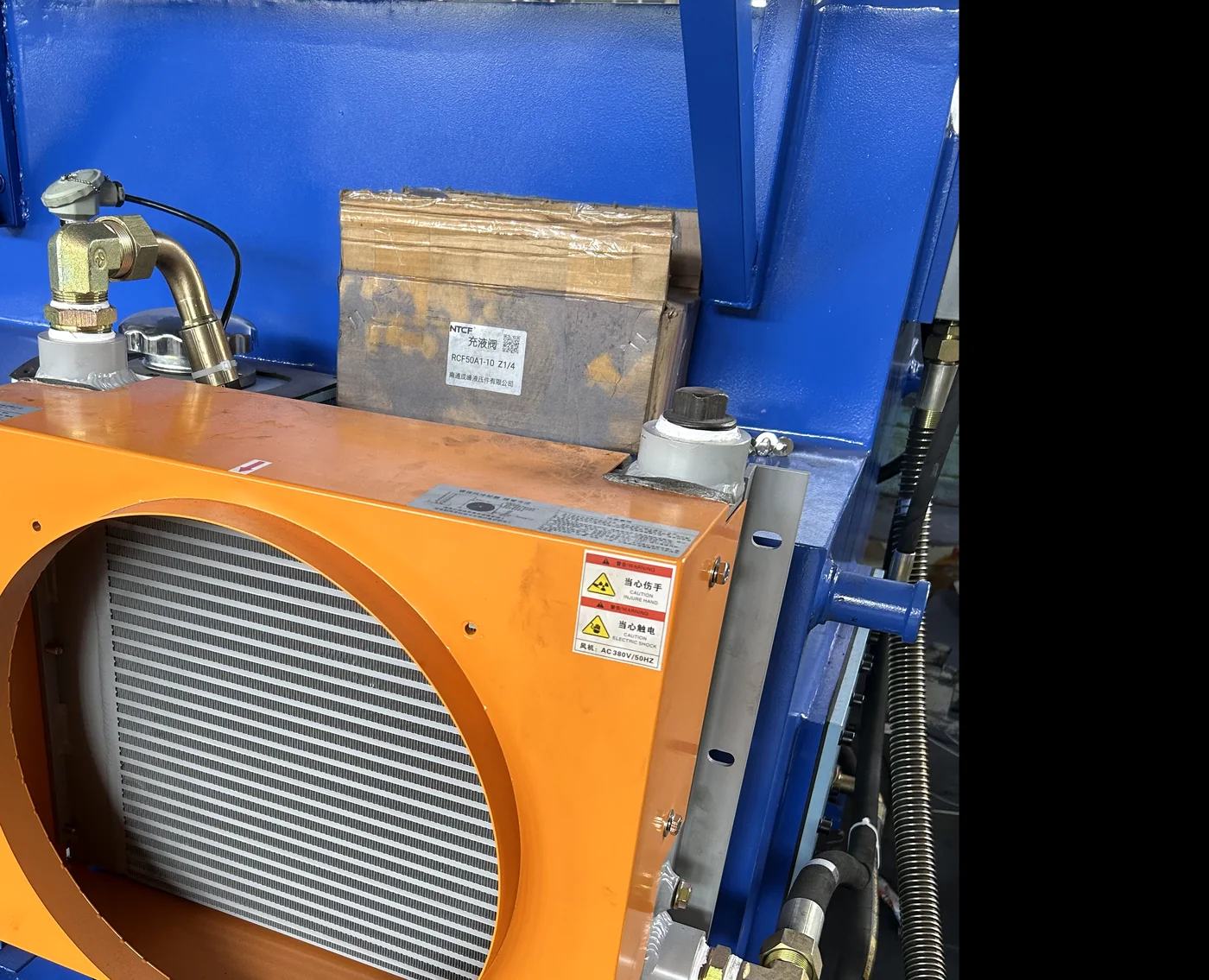 Air cooling unit installed on a shoe sole injection machine
Air cooling uses a fin-type radiator and fan. Hydraulic oil passes through the radiator, and airflow removes heat from the oil.
Advantages
Air cooling is easy to install. It does not require water pipes, a cooling tower, or a separate water circulation system. It is suitable for smaller factories and moderate production schedules.
Limitations
Performance depends on ambient temperature and workshop ventilation. In hot or poorly ventilated workshops, air cooling may be insufficient during long continuous production.
Persistent high oil temperature can shorten hydraulic seal life and reduce oil service life.
2. Cooling Tower Water Cooling
 Cooling tower used for water cooling circulation
A cooling tower uses circulating water to remove heat from the hydraulic system. It is generally more stable than air cooling for longer working hours.
Advantages
Cooling tower water cooling is suitable for medium to high production intensity, especially when the factory already has water circulation conditions. It improves oil temperature control and long-term hydraulic stability.
Limitations
A cooling tower requires pipe installation, space, water maintenance, and regular cleaning. Poor water quality may cause scale, blockage, or reduced cooling efficiency.
3. Industrial Chiller Water Cooling
 Industrial chiller for stable water temperature control
An industrial chiller actively controls water temperature and supplies cooled water to the hydraulic system. It provides the strongest and most stable cooling performance.
Advantages
A chiller is recommended for high-duty production, hot climates, and remote factories where after-sales service is difficult. It keeps oil temperature more controlled and helps extend the service life of seals and hydraulic oil.
Limitations
The main disadvantage is cost. A chiller also requires electricity, installation space, and basic maintenance.
How Production Intensity Affects Cooling
Cooling selection is not based only on machine model. Operating pattern is just as important.
Continuous production raises oil temperature faster. Slower production or longer rest intervals reduce heat load.
For this reason, two factories using the same machine may still need different cooling systems.
The chart below is a simplified trend example. Actual oil temperature depends on machine model, ambient temperature, hydraulic condition, cycle speed, ventilation, and maintenance.
Typical oil temperature trend during continuous production
Illustrative comparison under the same production intensity.
Recommendation by Factory Situation
For limited daily production, air cooling may be sufficient.
For stable medium-duty production, a cooling tower is often a balanced choice.
For high-volume production, hot climates, remote areas, or lower after-sales risk, an industrial chiller is the strongest option.
Final Advice
Cooling is not only an accessory. It affects hydraulic system life, oil life, machine stability, and long-term maintenance cost.
For shoe sole injection machines, choosing the right cooling system should be based on:
- Local climate
- Daily working hours
- Production speed
- Workshop ventilation
- Water quality
- After-sales service conditions
- Budget
For hot regions or intensive production, DEYU usually recommends water cooling. For the most stable long-term operation, an industrial chiller is the preferred solution.